
Redness and sensitive skin support in Melbourne
A barrier-first approach for facial redness, flushing, burning, stinging and reactive skin. Start with complimentary skin analysis to work out whether your next step should be gentle skincare, a facial, LED support or medical assessment.
Start here Complimentary skin analysis and treatment planningWork out why your skin is red or reactive
Redness may relate to temporary flushing, barrier damage, over-exfoliation, rosacea, dermatitis or another condition. Your complimentary skin analysis helps us decide whether cosmetic care is appropriate or whether medical review should come first.
New clients can receive 20% off their first eligible facial or peel. Treatment may be delayed if the skin is actively inflamed, burning or unsuitable for cosmetic care.
Reduce unnecessary irritation, support the barrier and select treatment only after the skin is calm enough to assess properly.
Different redness patterns need different responses
A treatment suitable for occasional sensitivity may be inappropriate for persistent redness, visible vessels or an active inflammatory flare.
Occasional flushing
Redness that comes and goes may be linked to heat, exercise, weather, alcohol, spicy food, stress or skincare triggers.
Persistent facial redness
Ongoing redness across the cheeks, nose, chin or forehead may need medical assessment, especially when accompanied by burning, bumps or visible vessels.
Burning or stinging skin
Skin that reacts to water, cleanser or basic moisturiser may have a compromised barrier or an underlying inflammatory condition.
Visible small vessels
Visible facial vessels are different from general sensitivity and may not respond to facials, peels or LED alone.
Post-treatment redness
Temporary redness can follow peels, SQT and other skin treatments. The correct response depends on the treatment, timing and whether recovery is progressing normally.
Redness with breakouts or rash
Red bumps, pustules, scaling, itching or a spreading rash should not be treated as simple sensitivity without appropriate assessment.
Four sensible first steps
For reactive skin, doing less for a short period can provide more useful information than adding another active treatment.
Simplify the routine
Pause unnecessary acids, scrubs, strong retinoids and fragranced products until the skin is assessed and feels more stable.
Support the barrier
Use a gentle cleanser, moisturiser and daily sun protection selected for sensitive or reactive skin.
Track possible triggers
Heat, sun, alcohol, spicy food, exercise, stress and unsuitable skincare can contribute to flushing in some people.
Avoid treating an active flare
Strong peels, aggressive exfoliation and intensive treatments may need to wait until burning, inflammation or active irritation has settled.
What may make sense for red or sensitive skin?
The correct next step may be skincare, a gentle treatment, LED support or referral rather than an aggressive procedure.
OBSERV 520X skin analysis
Helps us review visible redness, pigmentation, texture, congestion and barrier condition before recommending treatment or products.
View skin analysis →Professional skincare planning
A simple routine is often more useful than adding multiple actives. We can help select cleanser, moisturiser, hydration and sun-protection products that fit the skin.
View Medik8 skincare →Selected facials and peels
A gentle facial or carefully selected peel may suit stable sensitive skin, but active inflammation, burning or barrier damage usually needs to settle first.
View facials and peels →Healite II LED add-on
Healite II LED is available as a $39 add-on with selected treatments where suitable. It may support comfort and post-treatment recovery but does not diagnose or cure an underlying redness condition.
View Healite II LED →SQT Hydrating or another SQT option
SQT may be considered later when the skin is stable and the goal includes hydration, texture or post-inflammatory marks. It should not be treated as the automatic choice during an active flare.
View SQT treatment →Medical or dermatology review
Persistent redness, visible vessels, eye symptoms, painful burning, pustules or a recurrent rash may need medical diagnosis and treatment before cosmetic care.
See when to seek review →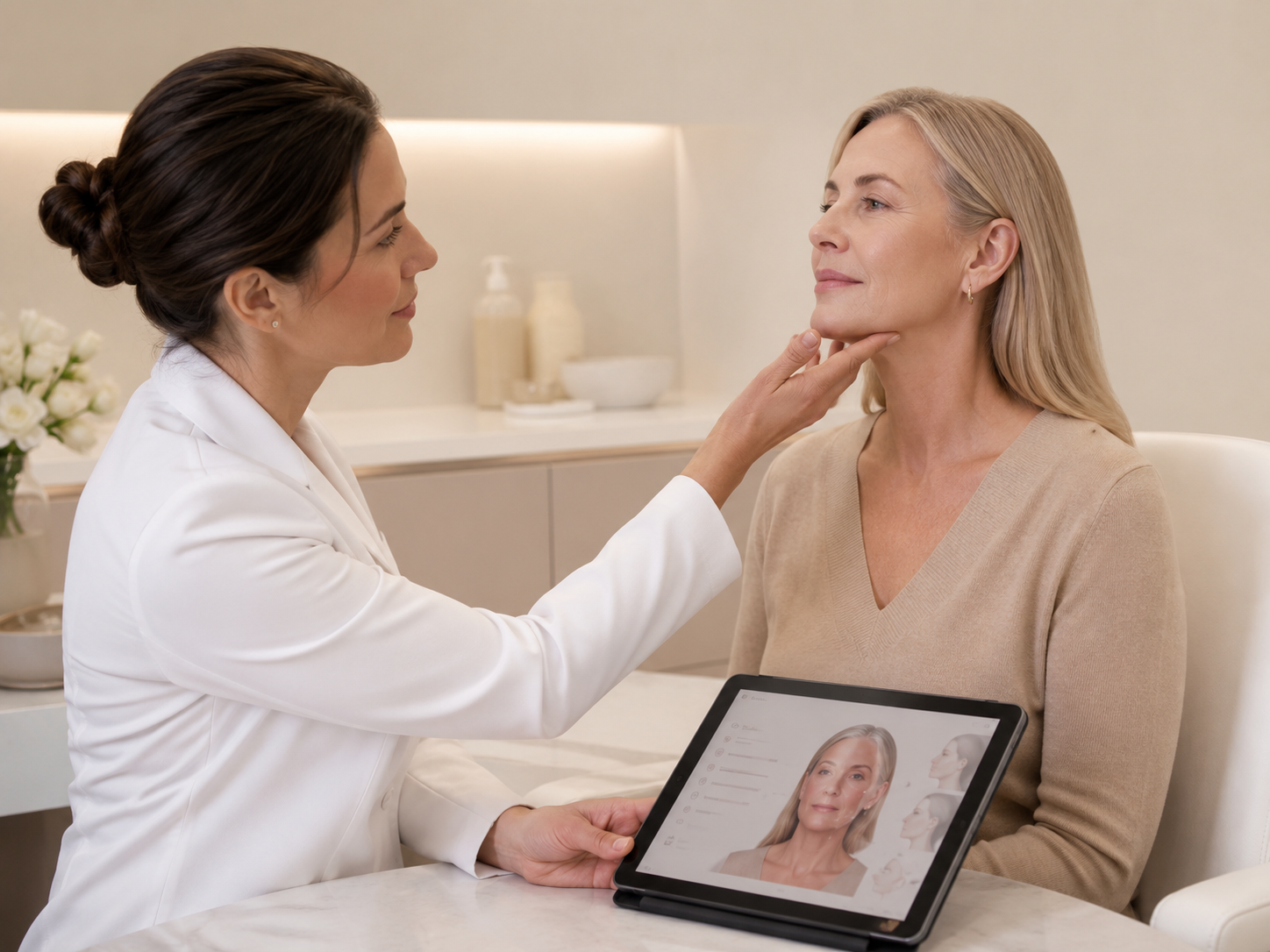
More treatment can make reactive skin harder to manage
Redness and sensitivity are often worsened by stacking active products or repeatedly exfoliating skin that is already irritated.
- Layering multiple acids, scrubs or exfoliating products
- Starting high-strength retinal or active skincare too quickly
- Using fragranced or astringent products on reactive skin
- Booking a strong peel while the skin is hot, burning or inflamed
- Assuming every facial redness concern is simple sensitivity
- Ignoring eye irritation, swelling, pain or a spreading rash
A staged approach to sensitive skin
Review the symptoms
We ask whether the redness is occasional, persistent, itchy, painful, burning, breakout-related or associated with visible vessels.
Check the barrier
We review current products, recent procedures, over-exfoliation and signs that the skin may need a simpler routine first.
Decide if treatment is appropriate
Some clients suit skincare, a gentle facial or LED support. Others should pause cosmetic treatment and seek medical review.
Introduce one change at a time
Sensitive skin is easier to assess when products and treatments are introduced gradually rather than all at once.
Review the response
We adjust the plan based on comfort, flare frequency, treatment response and whether another pathway is needed.
Persistent redness may need diagnosis and medical treatment
Rosacea, dermatitis, infection and other conditions can present with redness or sensitivity. Cosmetic treatments should not be used to delay appropriate medical assessment.
Seek medical advice for persistent or worsening redness, painful burning, eye irritation, swelling, pustules, crusting, a spreading rash or symptoms that do not settle with gentle skincare.
Eye symptoms matter. Red, irritated, dry, painful or light-sensitive eyes occurring with facial redness should be medically assessed.

Common starting points after assessment
The first recommendation may be home care rather than treatment. These prices apply only where the skin is suitable.
OBSERV 520X skin analysis
The preferred starting point for redness, sensitivity and barrier concerns.
Medik8 Superfacial
A professional facial option where the skin is stable and suitable.
Medik8 Sensitive PHA Peel
A gentler peel option considered only after barrier and sensitivity assessment.
Healite II LED add-on
Available with selected treatments for comfort and recovery support.
Current offer: 20% off your first eligible facial or peel. Healite II LED is shown only as a $39 add-on with selected treatments.
Redness and sensitive skin questions
Common questions about barrier support, facials, peels, LED, SQT and when medical assessment is more appropriate.
Facial redness can relate to flushing triggers, barrier damage, over-exfoliation, irritation, rosacea, dermatitis, acne-like inflammation or another skin condition. Persistent or complex symptoms should not be assumed to be simple sensitivity.
No. Skin analysis can help us review visible redness and plan cosmetic care, but rosacea and other medical skin conditions require appropriate medical diagnosis.
A simple routine is usually the safest starting point: a gentle cleanser, moisturiser and daily sun protection. Active ingredients should be introduced slowly and selected according to your skin tolerance and concern.
A gentle facial may support hydration and comfort in stable sensitive skin, but it will not treat every cause of persistent redness. Active inflammation, burning, rash or visible vessels may need a different pathway.
Possibly, but not during an active flare or when the barrier is impaired. A gentler peel may be considered after assessment, while some clients are better suited to skincare and barrier support first.
Healite II LED may be used as a supportive add-on for comfort and post-treatment recovery where suitable. It is not a substitute for diagnosis or treatment of rosacea, dermatitis, infection or another medical condition.
SQT Hydrating may be considered for selected stable sensitive or dehydrated skin, but active burning, inflammation, infection or a compromised barrier may make treatment unsuitable until the skin has settled.
Stinging can occur when the skin barrier is impaired or when a product is irritating the skin. Persistent burning or pain, especially with rash, swelling or eye symptoms, should be medically assessed.
Seek medical review for persistent or worsening redness, painful burning, visible vessels with ongoing symptoms, eye irritation, swelling, pustules, a spreading rash or symptoms that do not improve with gentle skincare.
New clients can receive 20% off their first eligible facial or peel after consultation. Suitability comes first, and treatment may be delayed if the skin needs barrier support or medical review.
Build the right barrier and treatment plan
Facials & Peels
Gentle Medik8 and mesoestetic options selected only after sensitivity and barrier assessment.
Learn more →Healite II LED Light Therapy
Supportive LED treatment information for comfort, recovery and suitable skin concerns.
Learn more →SQT Bio-Microneedling
Skin-renewal options including a hydrating pathway for selected stable skin.
Learn more →Pigmentation Treatment
For post-inflammatory marks and uneven tone that remain after redness or breakouts settle.
Learn more →See also: OBSERV 520X skin analysis · Medik8 skincare · Our locations
Start by understanding the redness
Book complimentary skin analysis to find out whether your next step should be barrier support, a gentle facial, LED, another treatment or medical assessment.